What Is Rocket Yoga? A Guide to This Dynamic Practice in Warwick
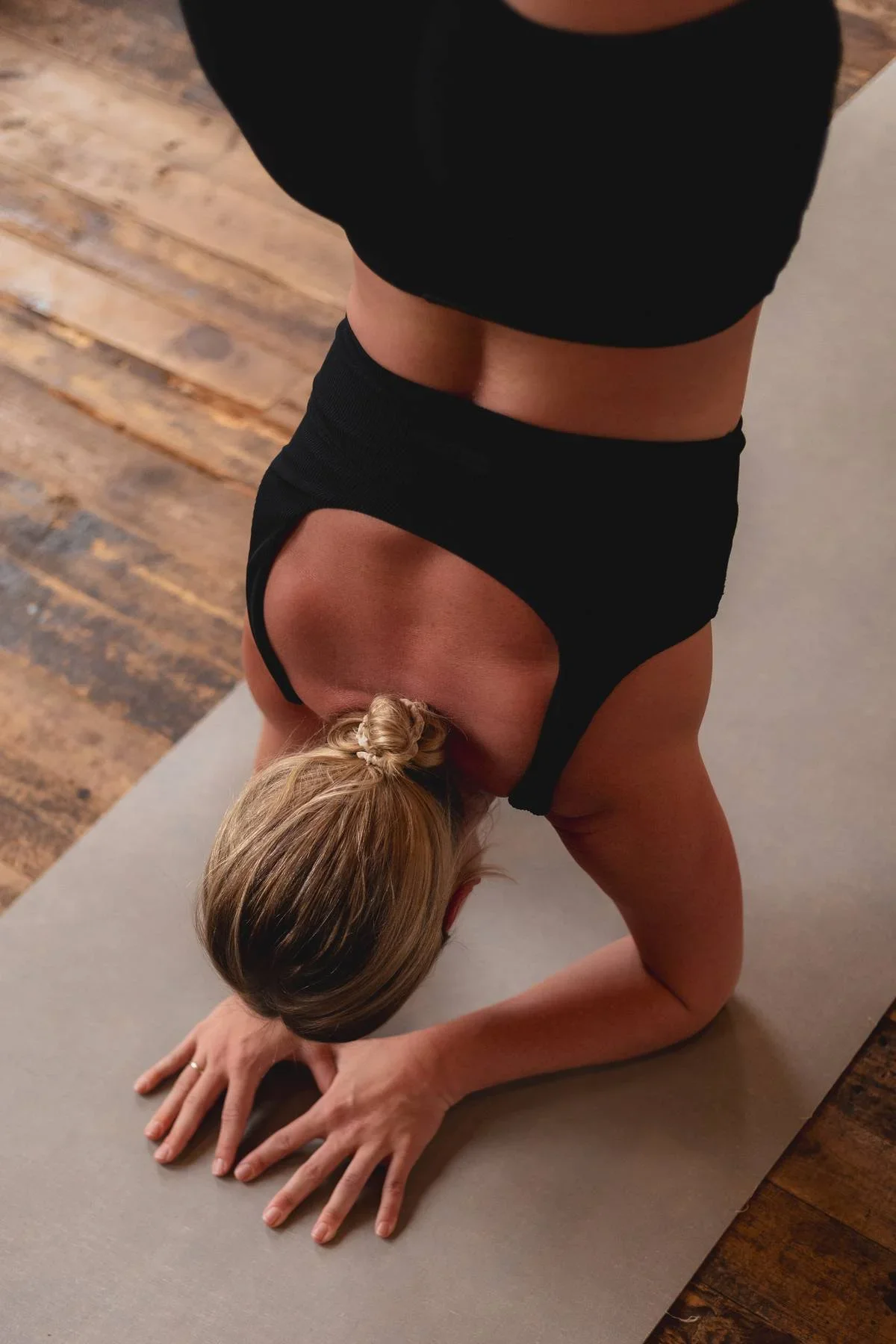
Finding length and release in a forward fold - one of the foundational shapes in every Rocket class.
There’s a moment in every Rocket class where something shifts. The breath finds its rhythm. The body starts to move without overthinking. And somewhere between a warrior and a twist, the mind goes quiet.
If you’ve seen Rocket on our timetable and felt curious, or if someone described it to you as “Ashtanga’s more playful sibling”, you’re not far off. Rocket yoga is one of the most dynamic, energising styles of yoga you can practise, and it’s become a deeply loved part of what we offer at Heist House Studios in Warwick. Not because it’s flashy or intense for the sake of it, but because it invites you to move with freedom, breathe with purpose, and meet yourself somewhere new on the mat.
Where Rocket Yoga Comes From
Rocket was born in San Francisco in the 1980s, created by a teacher called Larry Schultz. Schultz had spent years studying traditional Ashtanga yoga under Sri K. Pattabhi Jois in Mysore, India. He carried a deep love for the practice - its discipline, its depth, the way it asks you to show up again and again and again.
But he also noticed something. The rigid sequencing of Ashtanga, where you must master each posture before being allowed to move on to the next, was leaving some students stuck. People with different bodies, different histories, different starting points were being held back - not by a lack of commitment, but by a system that didn’t always leave room for them.
So he opened it up. He kept the bones of Ashtanga - the breath, the flow, the foundational shapes - but removed the gatekeeping. He allowed teachers to adapt, to offer variations, to meet each student where they actually were rather than where the system said they should be. He called the practice Rocket, because, as he put it, it gets you there faster.
What he meant wasn’t speed. He meant access. Rocket removes the barriers between a student and the full breadth of the practice. It says: you don’t have to earn your place on this mat. You already belong here.
That philosophy, of radical welcome, of honouring every body, is something we hold close at Heist House Studios. It’s woven into everything we teach here in Warwick.
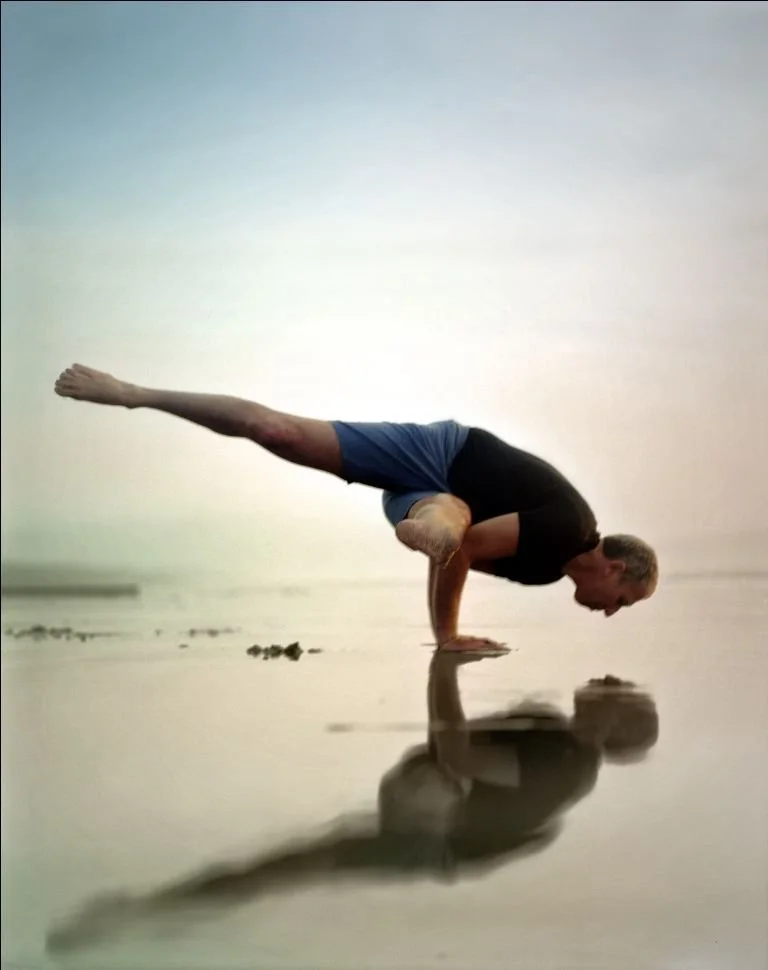
Larry Schultz - the teacher who broke open the Ashtanga sequence and created Rocket yoga so that every body could access the full practice.
What a Rocket Class Feels Like
A Rocket class has a recognisable architecture, but it’s never rigid. There’s structure beneath the surface, a similar in rhythm to Vinyasa Flow, with breath and movement woven together - but with more shape to it, more scaffolding for the body to lean into.
The class begins with arriving. A few breaths. A settling. Your teacher might invite you to close your eyes, to notice where you’re holding, to let the outside world soften just a little. From there, you’ll move into sun salutations - building warmth through the body, finding the rhythm that will carry you through the rest of the practice.
The standing sequence is where Rocket starts to show its personality. Warriors, triangles, standing balances, twists - all linked by breath, all woven together with transitions that are sometimes traditional, sometimes playful, sometimes surprising. This is where you’ll feel the teacher’s creativity come alive.
Then you’ll come down to the mat for seated postures - forward folds, hip openers, deeper twists. The pace might slow here, just slightly, giving the body time to receive rather than only give. And then there are the inversions. Yes, Rocket includes headstands, shoulder stands, arm balances - but every single one is offered with a modification, a softer version, a way in that doesn’t require you to be anywhere other than where you are today. Nobody will ever ask you to go upside down if your body is saying not yet. There is always child’s pose. There is always permission to pause.
The class closes the way it opened - with breath, with stillness, with savasana. After all that movement, this final rest is not optional. It’s where the practice lands. It’s where the nervous system integrates everything the body has moved through. It’s perhaps the most important part of all.
You’ll leave feeling something hard to name - energised and calm at the same time. Strong, but soft. Awake.
Understanding Rocket 1, 2, and 3
Within the Rocket system, there are three main sequences - each with its own quality, its own invitation.
Rocket 1 is rooted in the Ashtanga Primary Series. Its focus is on standing postures, forward folds, and hip openers. It tends to feel the most grounding of the three - a strong foundation, a steady rhythm, a practice that teaches you to root down before you rise up. It’s often the most accessible entry point into Rocket, and many students find it deeply nourishing.
Rocket 2 draws from the Ashtanga Intermediate Series. Here, the emphasis shifts to backbends, deeper twists, and arm balances. There’s more opening through the front body, more expansion, more invitation to explore what it feels like to take up space. It asks a little more of the body physically, but modifications are always there to meet you.
Rocket 3 - sometimes called The Happy Hour - is a freestyle blend of both. The teacher draws from Rocket 1 and 2, weaving together the elements that serve the room that day. It’s often the most creative, the most unpredictable, the most alive. There’s a joy in Rocket 3 that’s hard to describe until you’ve felt it.
At Heist House in Warwick, our Rocket classes move fluidly between all three. Our teachers read the room, listen to the energy, and create a practice that honours what’s needed, not what’s prescribed.
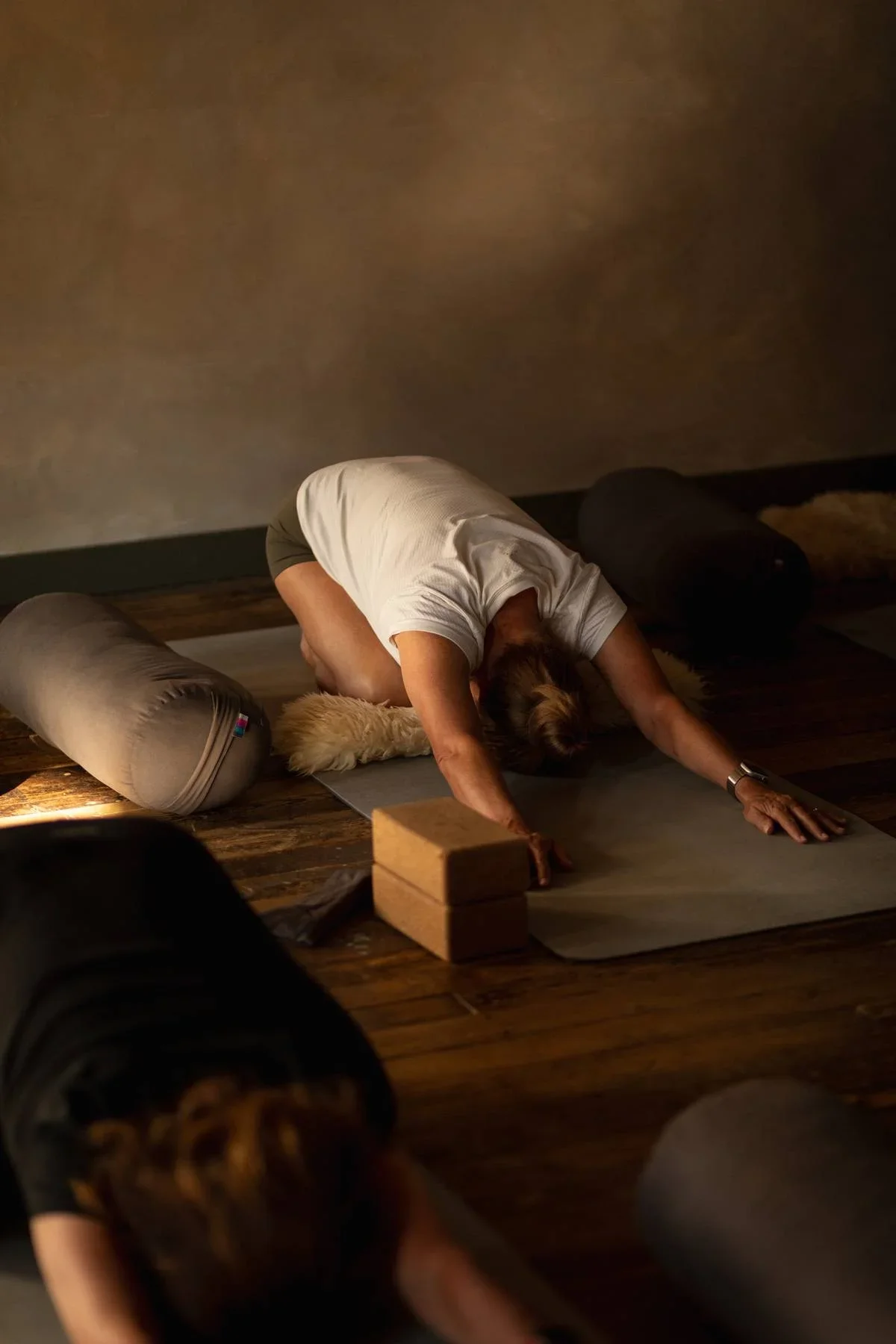
There is always child's pose. There is always permission to pause.
How Rocket Sits Alongside Other Styles
One of the questions we hear most often is how Rocket compares with the other practices on our timetable. The truth is, each style holds its own wisdom. Rocket isn’t better than any other - it’s simply different in its offering.
Alongside Ashtanga: Ashtanga asks for devotion to a fixed sequence. The same postures, the same order, every single time. There’s beauty in that repetition - a deepening that comes through discipline. Rocket takes the same family of postures but invites more freedom, more play, more room to move in ways that suit the body you have today rather than the body the sequence expects.
Alongside Vinyasa Flow: Vinyasa is free-form - each class shaped entirely by the teacher’s intention, the music, the mood. There’s no underlying sequence to learn. Rocket offers something to anchor to. Over time, you begin to recognise the framework, to anticipate certain shapes, to notice how your body responds differently to the same posture from week to week. Both are breath-led and flowing, but Rocket gives you a thread to follow.
Alongside Yin: They sit at opposite ends of the same spectrum. Yin is stillness, patience, surrender. Postures held for minutes at a time, targeting deep connective tissue, asking the body to soften rather than strengthen. Rocket is movement, rhythm, activation. And yet, they need each other. Many of our students in Warwick practise both - Rocket for energy and vitality, Yin for depth and release. The combination is remarkably whole.
Alongside Restorative: If Rocket is the inhale - expansive, energising, upward - then Restorative is the exhale. Supported by props, held in gentleness, asking nothing of the body except to receive. They are two sides of the same breath, and a practice that includes both has a beautiful rhythm to it. We explored the depth of restorative work in our piece on how restorative yoga supports the nervous system, which offers a lovely companion read to this one.
Alongside Hot Yoga: Hot yoga relies on external heat - a room warmed to 35 to 40°C - to deepen the physical experience. Rocket builds heat from the inside out, through breath and movement alone. The warmth you feel is entirely yours. For some bodies, this feels more sustainable, more natural, more honest. If you’ve tried hot yoga and found it overwhelming, Rocket might offer the intensity you enjoyed without the environmental strain.
Who Finds Their Way to Rocket
All sorts of people. That’s one of the most beautiful things about it.
If you’re completely new to yoga, you are welcome here. Our Beginners classes are a gentle way to learn the foundational shapes and breathing practices first, if that feels right. But many people step into Rocket as their very first class and find it holds them beautifully. Just let your teacher know - they’ll guide you.
If your mind races and slower practices feel restless, Rocket gives your attention something to land on. The flowing movement and breath rhythm tend to quiet the mental noise, not by forcing it, but by filling the space with something more nourishing.
If you come from a fitness or sports background and want a practice that honours the physical body while also tending to the inner landscape, Rocket bridges that gap with grace. It is challenging. It will build strength and flexibility and cardiovascular fitness. But it will also teach you to breathe, to listen, to notice what’s arising beneath the surface.
And if you’ve been practising yoga for years and want something that rekindles your curiosity - Rocket has a way of making even familiar shapes feel new again.
What Moves Through the Body
The physical gifts of Rocket unfold gradually, and they run deep.
Strength builds through the flowing sequences, the weight-bearing postures, the moments where you hold yourself in space. Not the isolated, machine-guided strength of a gym, but functional, integrated strength that lives in the body and supports how you move through your day - how you carry, how you reach, how you stand.
Flexibility develops almost as a side effect. Because the body is warm from dynamic movement, the muscles are more willing to release, to lengthen, to let go of patterns they’ve been holding. Many students notice changes here faster than they expect.
Balance and coordination sharpen through the standing postures, the transitions, the moments of one-legged stillness. Your body learns to find centre, to correct, to trust itself in motion.
And the spine - Rocket moves the spine in every direction. Flexion, extension, rotation, lateral bending. For anyone who spends long hours seated, this is quietly transformative. The spine was designed to move in all these ways, and Rocket honours that full range beautifully.
What Moves Through the Mind
This is where Rocket often surprises people. They come for the physical challenge and stay for what happens underneath.
The focus required to move through a Rocket sequence keeps the mind tethered to the present. When you’re balancing, twisting, breathing into a backbend and there simply isn’t room for the to-do list. The practice becomes a form of moving meditation, and for people who find seated stillness difficult, this can be quietly life-changing.
We’ve written before about how the nervous system responds to mindful movement - and Rocket works with this beautifully. Where slower practices calm the system through stillness, Rocket helps to discharge the restless, stuck energy that accumulates when stress has been sitting in the body for too long. Think of it as moving the energy through rather than holding it down. Both approaches are needed. Both have their place.
Many of our students describe a particular quality that Rocket leaves behind - a feeling of being calm and alive at the same time. Not drained. Not wired. Something quieter and more grounded than either. That’s the nervous system finding its balance. That’s the difference between a practice and a workout.
Over time, there’s something else that develops - a quiet confidence. When a posture that felt impossible three months ago suddenly arrives in your body without fanfare, something shifts in how you see yourself. Not just on the mat, but in your life. Growth is happening, even when you can’t see it. Rocket has a way of reminding you of that.
Arriving at Your First Rocket Class
Coming to anything new can feel like a lot. Here’s what your first Rocket class at Heist House will hold.
Arrive a few minutes before. Set up your mat. There will be blocks, straps, and blankets available, take whatever feels good. Introduce yourself to your teacher and let them know it’s your first time. They’ll hold that awareness throughout the class, offering guidance and modifications as you go.
Wear something comfortable that moves with you. Layers are fine, you can always peel them off as you warm up. You’ll be barefoot. Bring water if you’d like, though most people find the breath practice regulates their temperature more than they expect.
During class, follow the cues and give yourself permission to not know what’s coming. That’s part of the beauty of your first few Rocket classes - there’s a freshness to it, a sense of discovery. If something doesn’t feel right in your body, leave it. Rest. Ask. And know that if yoga doesn’t feel relaxing at first, that’s a completely normal response - your body is learning a new language, and it takes time to feel fluent.
Afterwards, take a moment before you leave. Sit with what’s there. The transition from practice back into the world deserves a breath or two of its own.
You can find our upcoming Rocket classes on the class schedule, and if you’re new to the studio, our First-Timer pass is a lovely way to begin.
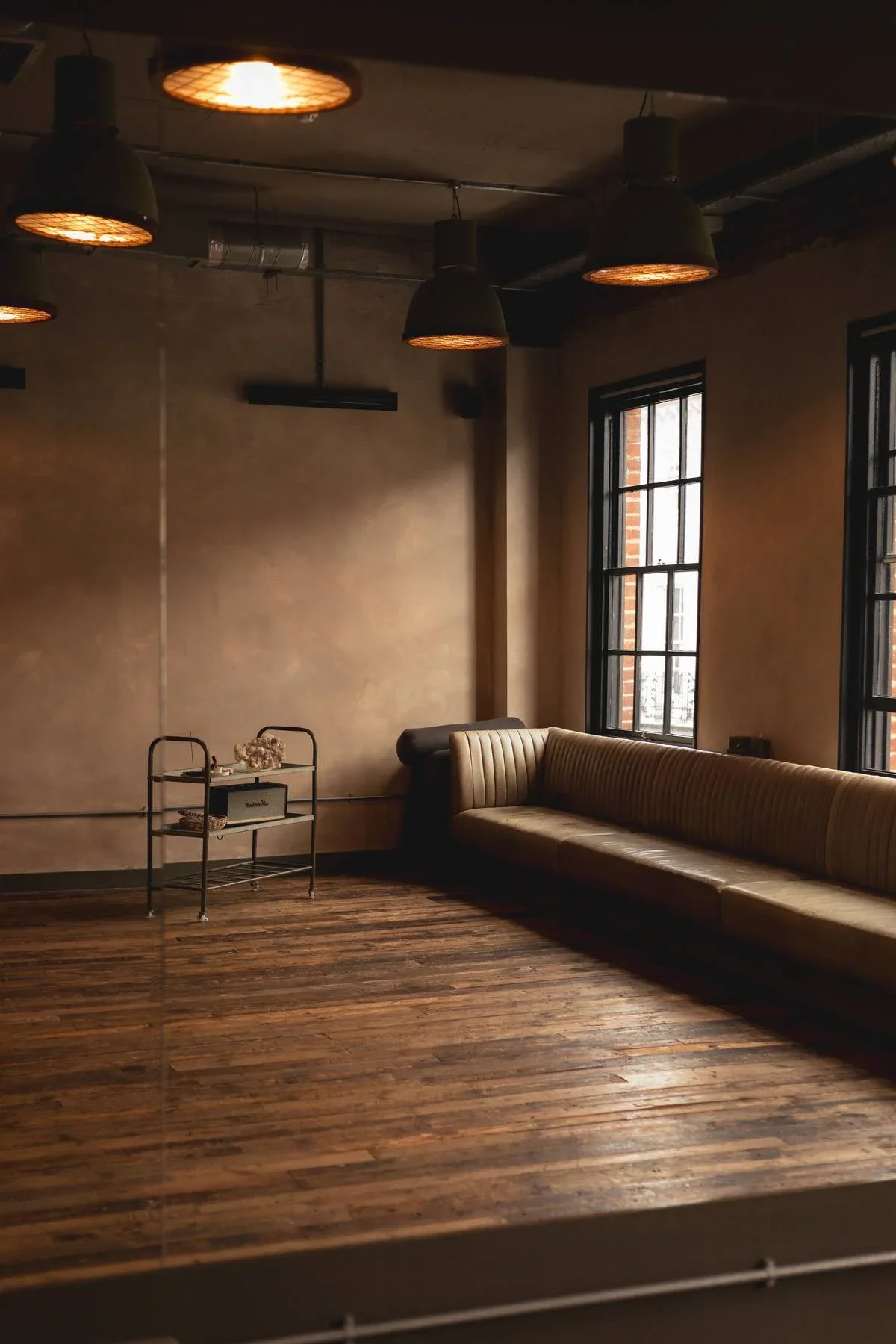
Our studio in the heart of Warwick - a space designed for movement, stillness, and everything in between.
Building a Practice That Holds You
We always invite our students to think about their practice as a whole - not just the classes that excite them, but the ones that balance them.
Rocket paired with a weekly Yin or Restorative session creates something greater than the sum of its parts. The dynamic and the still. The effort and the surrender. The body building strength and the nervous system learning to soften. Together, they create a rhythm that genuinely supports how you live off the mat.
Our Deep Rest Series is another beautiful companion to Rocket - designed to help you access the kind of rest that busy bodies and full minds often struggle to reach alone. It’s not about doing less. It’s about receiving more.
And if you’re curious about moving beyond the mat entirely, our sound healing sessions offer a deeply embodied way to integrate your practice. The vibrations settle into the spaces that movement alone can’t always reach. Many of our students describe it as the missing piece.
If you’re not sure how to weave it all together, look at our full timetable or simply ask. We love nothing more than helping people find a rhythm that feels like home.
Frequently Asked Questions
-
Yes. The practice was designed to be accessible to all bodies and experience levels. Modifications are offered throughout, and our teachers will always meet you where you are. If you’d like to build confidence with the basics first, our Beginners classes are a gentle starting point, but many people begin with Rocket and feel entirely held.
-
Once or twice a week creates a beautiful rhythm for most people. On other days, a slower practice like Yin or Restorative can balance the energy and support recovery. Listen to your body. Some weeks will ask for more movement, others for more stillness. Both responses are right.
-
Neither. Strength and flexibility are not prerequisites - they are things that develop through consistent, patient practice. Come exactly as you are. Your body will show you what it can do.
-
Rocket 1 focuses on standing postures and forward folds, offering a grounding, accessible foundation. Rocket 2 moves into backbends, deeper twists, and arm balances. Rocket 3 - The Happy Hour - blends both into a creative, free-flowing practice. At Heist House, our classes draw from all three.
-
Inversions are woven into the Rocket sequence, but they are always optional and always offered with modifications. You might use the wall, try a gentler variation, or simply rest. There is no pressure. Ever.
-
In most cases, yes - with some adjustments. Let your teacher know before class and they’ll offer alternatives for anything that doesn’t serve your body. If you’re unsure, get in touch beforehand and we can help you find the most supportive starting point.
-
There is no keeping up. Rocket is not a performance. Move at your own pace. Rest when you need to. Skip what doesn’t feel right. The person next to you is deep in their own experience - and your teacher will never rush you. This practice is yours.
Reserve your space on the mat. View our class schedule and begin your Rocket journey at Heist House Studios.