

What Is a Yoga Retreat Abroad Really Like? Five Nights in Puglia
If you have been circling the idea of a yoga retreat abroad without quite booking one, this is what ours was actually like.
In March 2026, we took Heist House Studios beyond the UK for the first time and travelled south into the olive groves of southern Italy. VITA: The Art of Being Alive was five nights at Masseria Specula, a beautifully restored farmhouse held within ancient trees, open sky and the wild, generous beauty of Puglia.
It was five nights that reminded us what yoga retreats abroad can be when the place is allowed to shape them, a celebration of movement, food, light, connection, and the simple pleasure of being present. If you are weighing up a first international retreat, we hope this is useful.
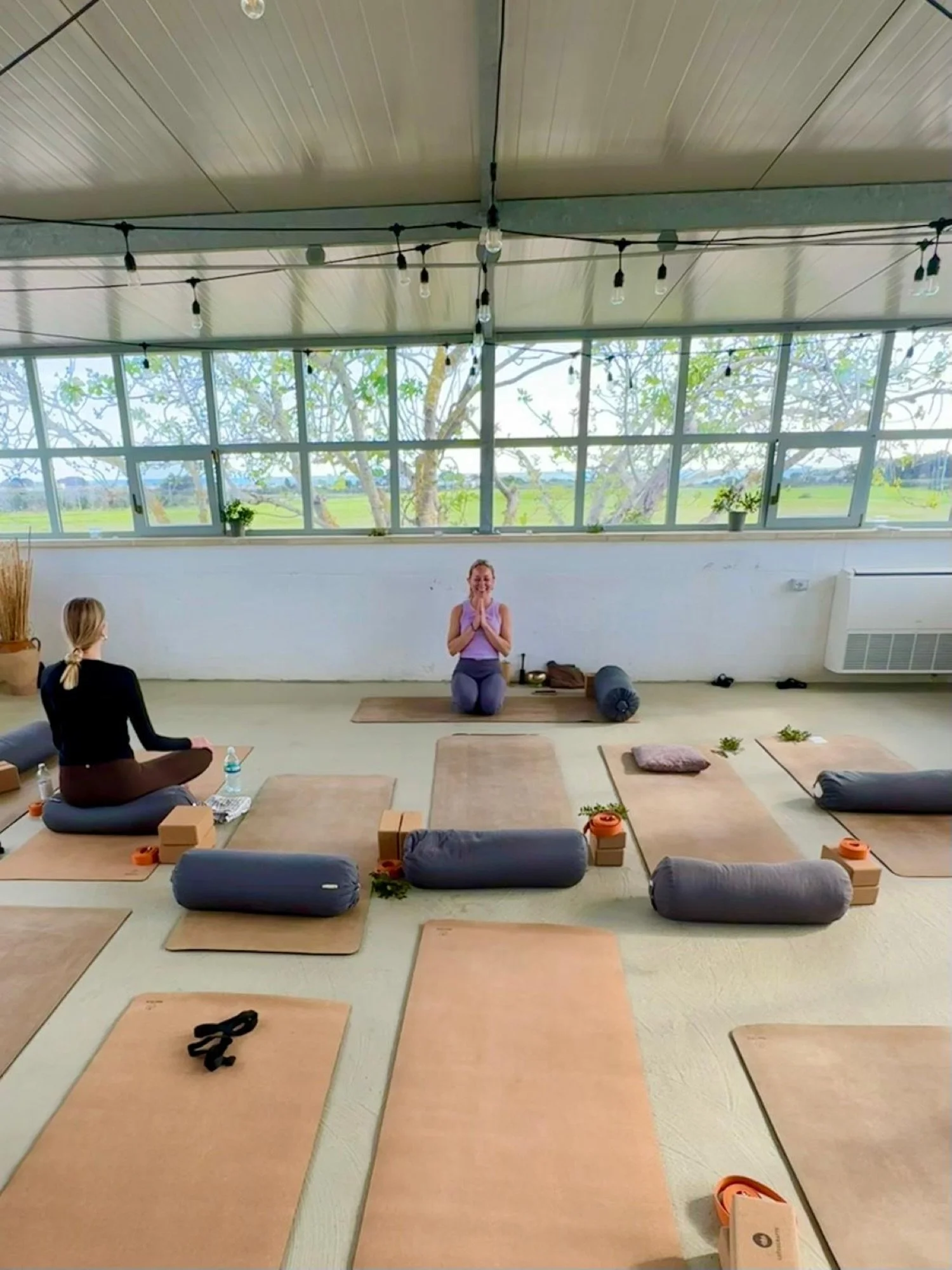
Morning practice at Masseria Specula, the room opening onto olive groves and the first of the spring light.
Where We Stayed: Masseria Specula, Among the Olive Groves
Masseria Specula is unlike anywhere we have stayed. Set within a vast landscape of olive trees and open countryside, with the Ionian Sea a short distance away, it holds the particular stillness that old agricultural buildings seem to carry. The moment you arrive the pace drops; the thick walls do their work; the light moves slowly through the rooms and takes you with it.
A masseria is a traditional fortified farmhouse, built centuries ago as the heart of a working estate, low and solid and made from local limestone. Many fell quiet during the last century, and a handful have since been carefully brought back with the original architecture left intact. Vaulted ceilings that hold the cool, whitewashed walls that throw the light around, deep window recesses, and floors worn smooth by a few hundred years of use.
Our rooms were simple and characterful, all white linen, terracotta and pale stone, with the kind of quiet that lets your nervous system unclench. Mornings began with soft spring light spilling across the floor; evenings folded into long tables, warm lamps, and conversation that ran later than anyone had planned.
Between sessions there were slow wanders through the groves, pockets of stillness in the sunshine, and time to sit with coffee and simply listen. It was everything we hope for from an European yoga retreat, movement and rest braided with land that knows how to hold you.
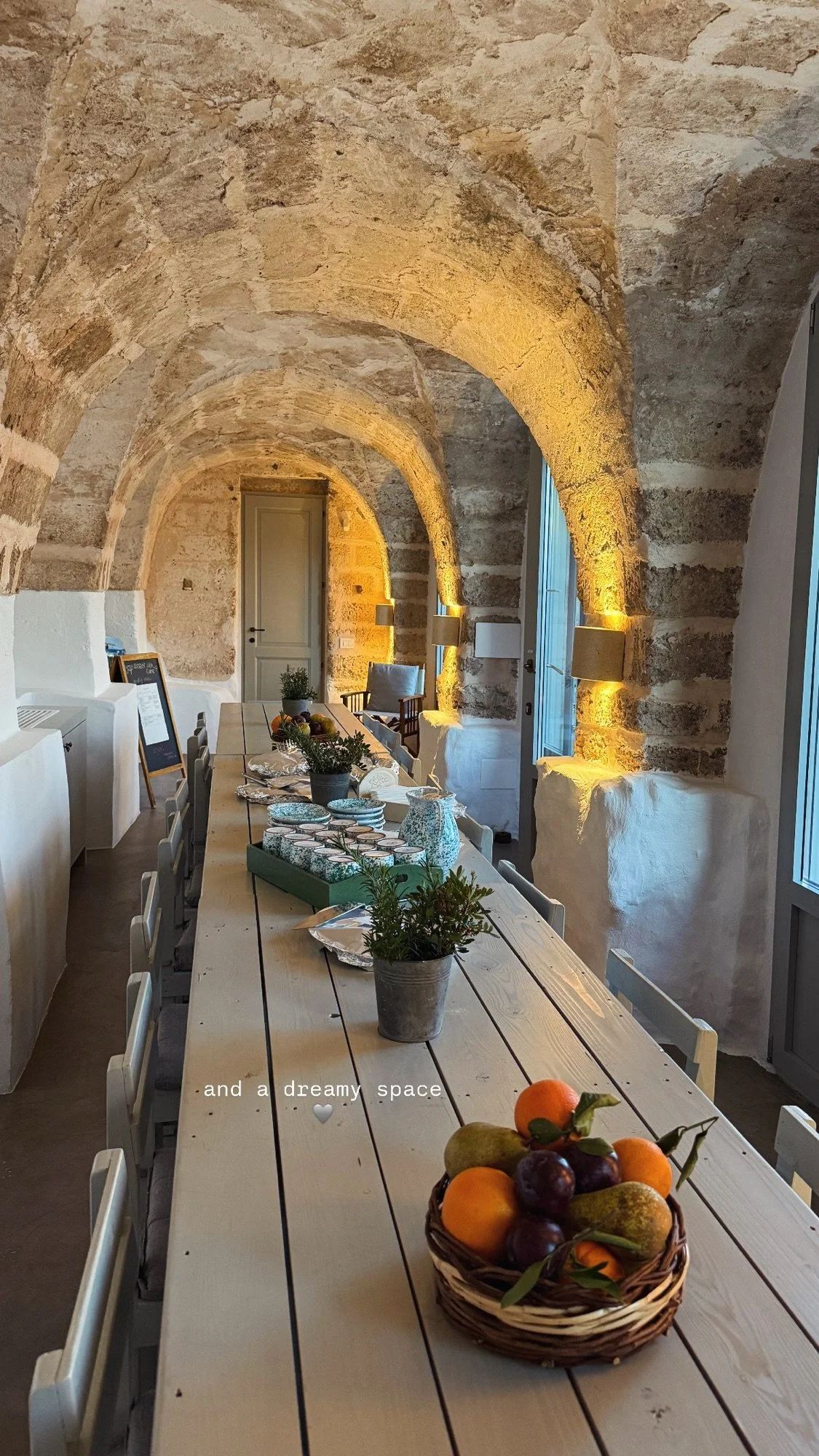
The vaulted archways of the masseria, cool and quiet even at the middle of the day.
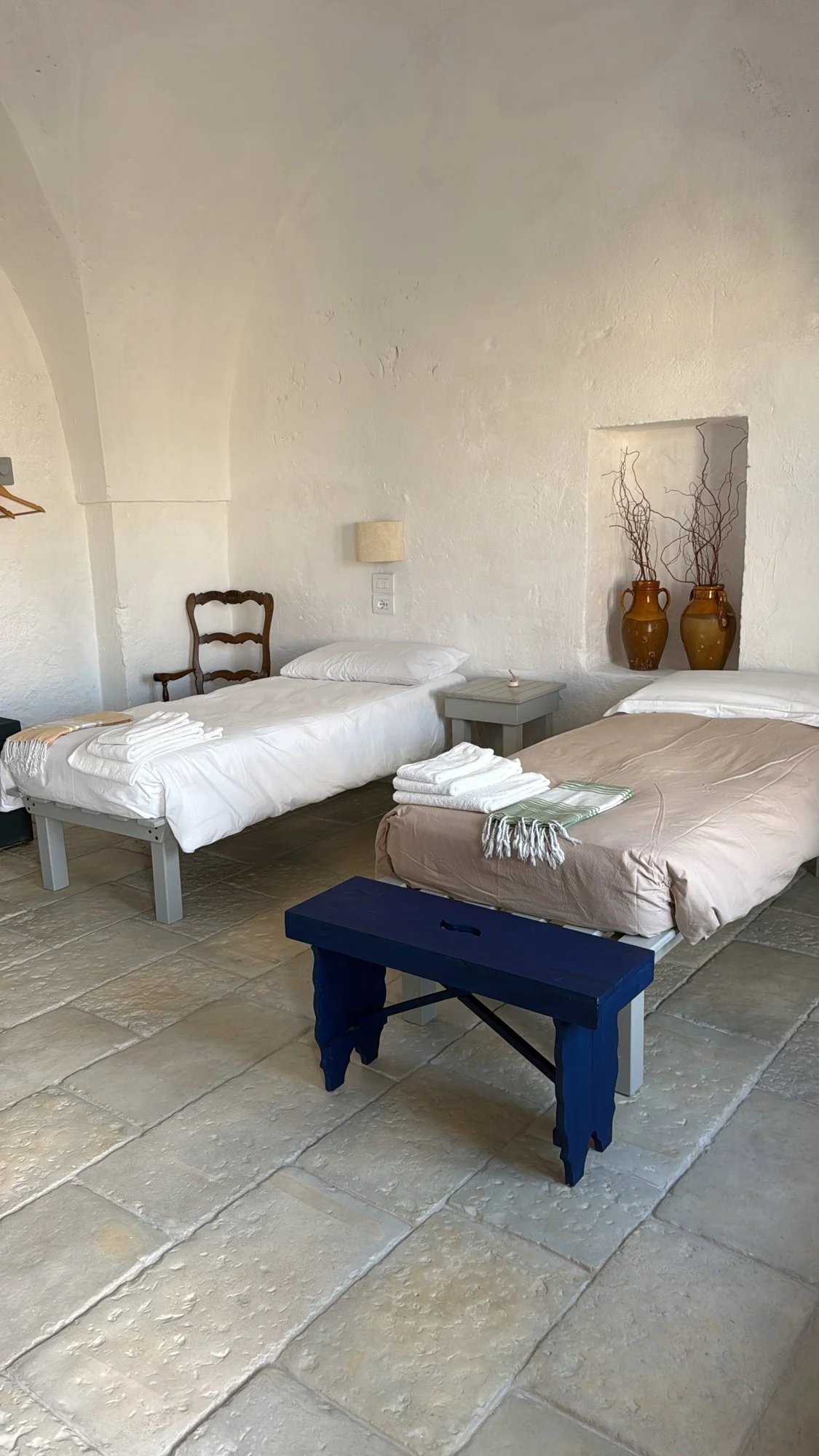
One of the simple whitewashed rooms, all white linen, terracotta and pale stone.
The Experience: Movement, Breath and Long, Slow Days
Across the week we explored what it means to feel properly alive, grounded in the body and open to whatever the day offered. The pace was spacious on purpose: enough guidance to feel held, enough freedom to take what you needed most that morning.
Led by Kate and Sam, each day wove meditation, practice, rest, food and exploring into a gentle rhythm. We moved from strength to surrender, from bright mornings to slow afternoons, and nothing ever felt rushed. Sessions layered gently; long lunches and open hours helped the work land. Most of it happened in the Shala, a light, quiet room that became the heart of the week.
“The days were very well planned and, as always, flexible. The amount of practice was great.” “Incredible facilitators, felt very seen, supported and encouraged by both. The diversity of classes was also appreciated!”
Early Mornings and Meditation
Days opened quietly, with meditation before the heat arrived and the rest of the masseria had properly woken. There is something about sitting in a stone room at that hour, with the light only just coming up over the groves, that makes the practice land differently.
From there mornings built heat, coordination and focus, with options offered throughout so challenge stayed kind. Some days asked for something stronger, others for something slower and closer to the floor. If you have practised with us in Warwick it would have felt familiar, simply with more time and better light.
Kate and Sam taught together across the week, and their two styles turned out to sit beautifully alongside one another. One of the most memorable sessions was a partnered practice, which produced a great deal of laughing and rather more trust than anyone expected to find on a Tuesday.
“For me, early morning meditation is important and I loved it. The partnered practice was the most fun ever.” “Kate and Sam teaching made such a beautiful feel to our practice. Their styles complement each other perfectly.”
Outcome: steadier breath, looser shoulders, and that clear, grounded energy you can carry into the rest of the day.
Rest, Breath and Open Hours
Afternoons softened. Unhurried sits, time in the sun, and long stretches of nothing in particular gave attention room to settle rather than strain. There was no schedule to keep up with and nothing was compulsory, which turned out to be the most restorative part of all.
“We had a lot of fun and found so much peace in the Shala. Ever grateful for that.”
Outcome: a lighter head, an easier pace, and a felt sense of being back in your own rhythm.
“Meditation and practice away from everything. Wild and natural spaces. Beautiful people. Sea swims. Authentic food. Amazing teachers.”
Made With Love: The Nonnas and the Table
Some of our favourite moments happened around the table.
Every meal was prepared by local nonnas, bringing generations of Puglian cooking and tradition into our week. This was not food made simply to feed a retreat group; it was food with a story. Recipes passed down through families, simple ingredients treated with care, fresh local produce, and pasta made by hand that same morning.
We ate together around a long table, and each meal became a gathering point, a place to connect, reflect and laugh before wandering back out into the sunshine. Lunches ran long and nobody was in any hurry to leave, which is usually the sign of a good one.
There was something incredibly special about being nourished in this way. Not just by what was on the plate, but by the tradition, generosity and love behind it. Food became part of our experience of Puglia, and the table became one of the places where we connected most.
“Authentic food.” “Beautiful people.”
Orecchiette, Shaped by Hand
If Puglia has a signature, it is orecchiette. Little ears, a small thick pasta with a dimple pressed into the middle, shaped to hold sauce.
Watching it made is something else entirely. A piece of dough is dragged across the board with a blunt knife and turned back over a thumb in a single movement, quick and certain and impossible to follow. Then we tried. Ours came out larger, thicker and considerably less uniform, and laid beside the nonnas’ neat rows the difference was very clear.
Nobody minded in the slightest. They were cooked and eaten that same evening, and they tasted all the better for it.
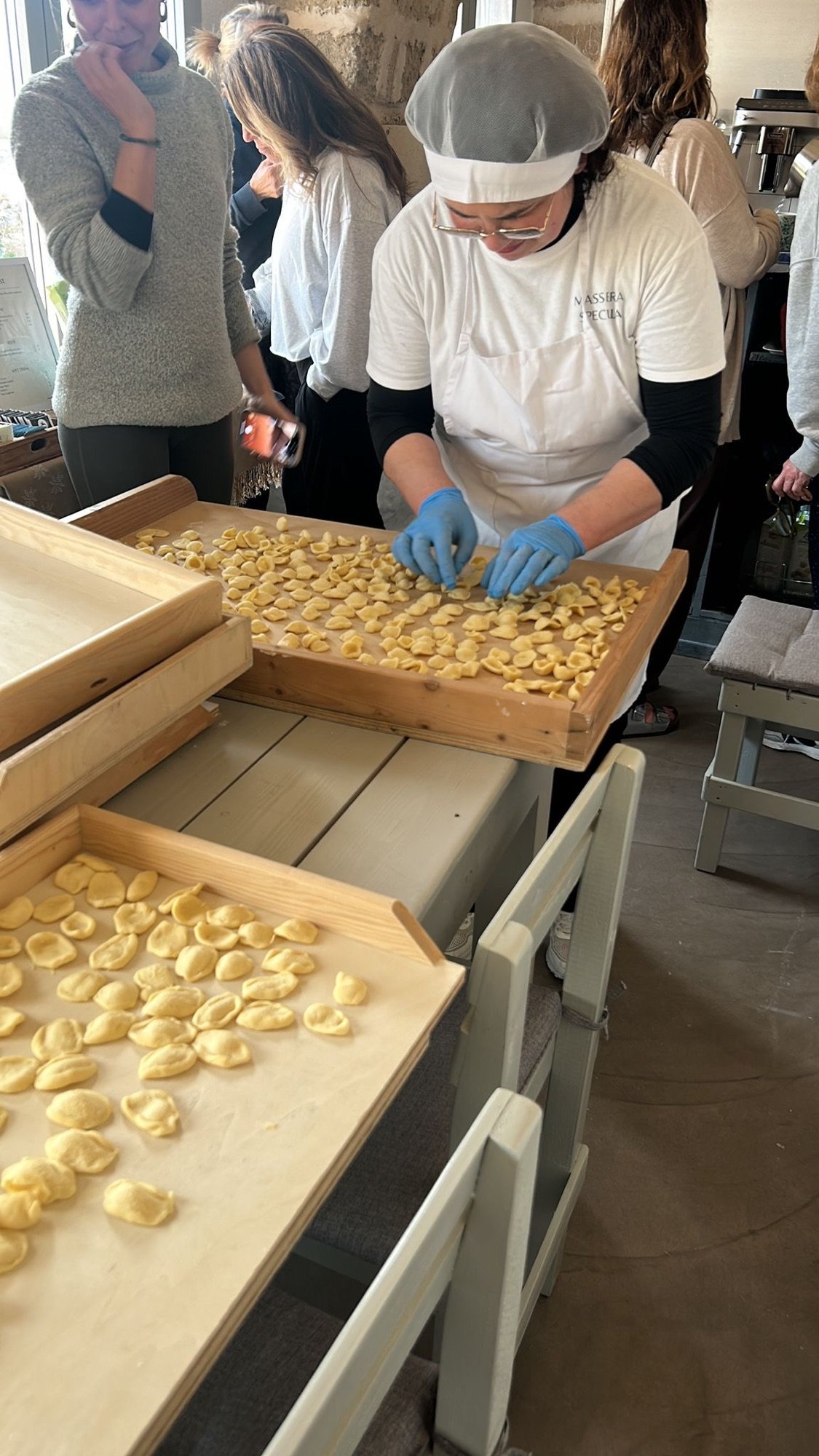
Orecchiette shaped by hand, the way it has always been done.
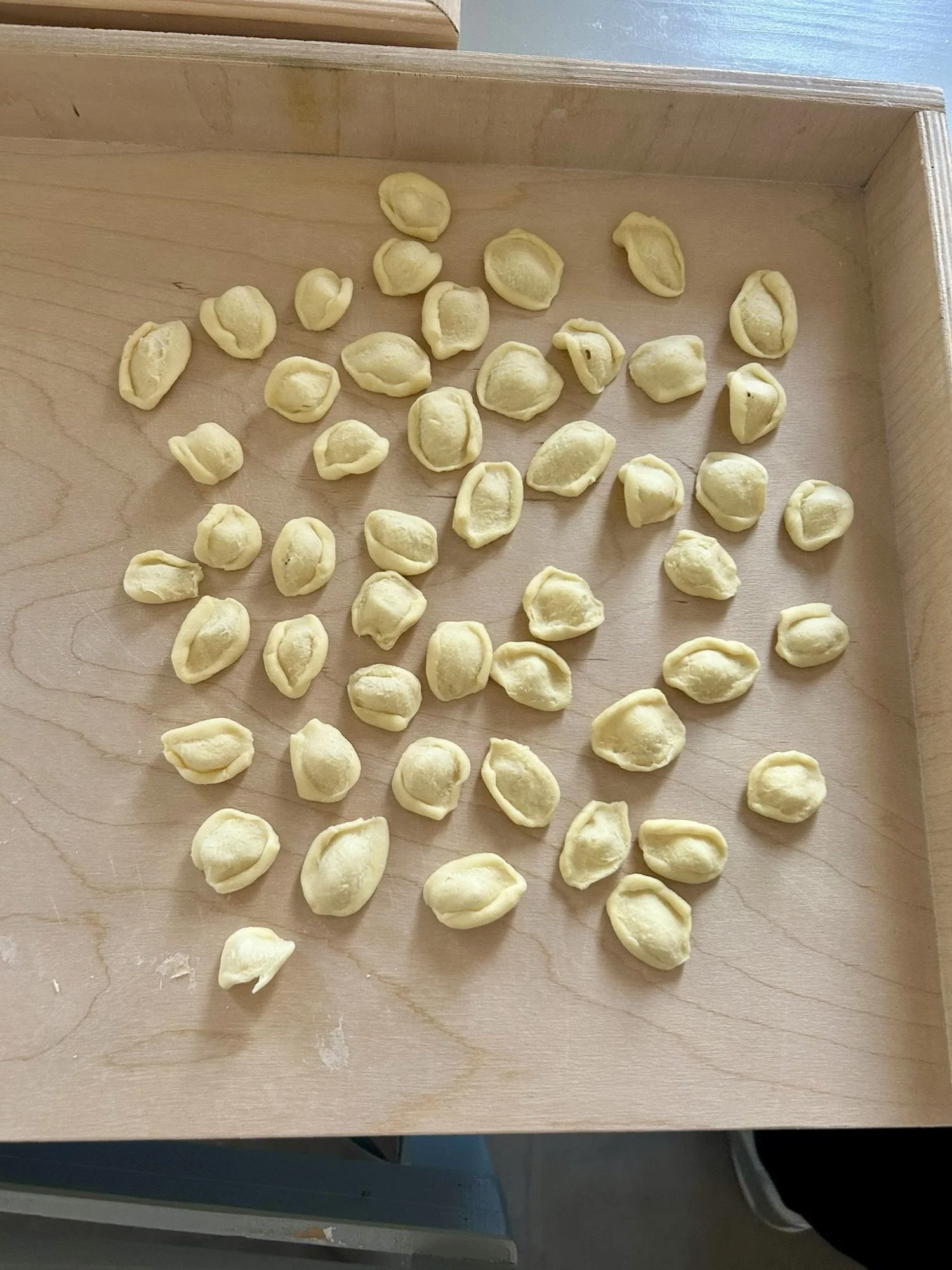
Set out on wooden trays to dry before dinner.
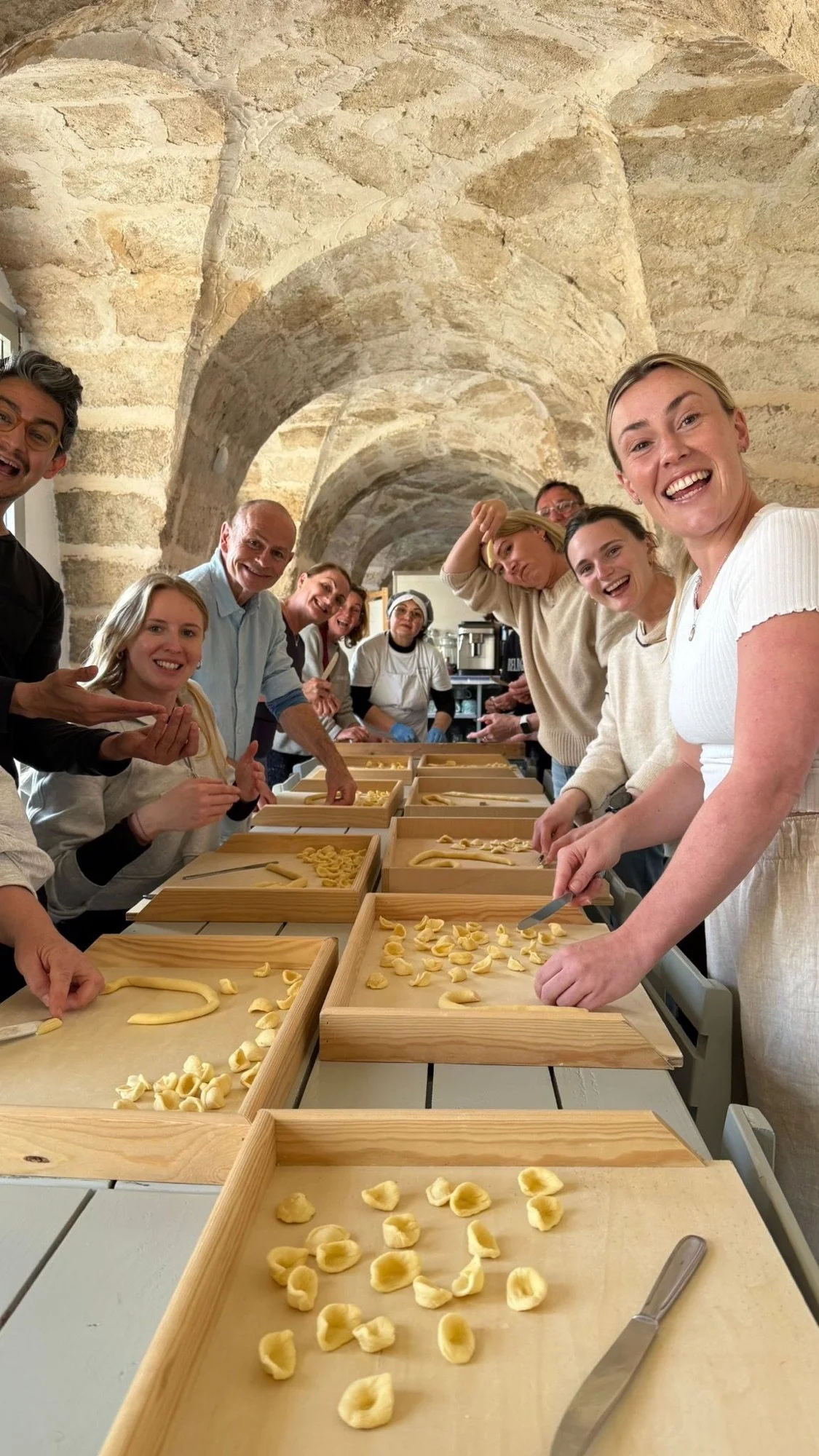
Our turn. Ours came out larger, thicker and considerably less uniform.
More Than Yoga
Yoga was at the heart of our days, but this retreat was never only about yoga. It was about the whole experience: movement, food, nature, culture, travel, rest and connection.
We explored the landscape and the local area, ate food made by people who have been cooking these recipes their whole lives, spent time by the sea, and allowed ourselves to settle into the slower rhythm of southern Italy.
This is what we love about creating retreats. The destination becomes part of the practice; the culture becomes part of the experience; and the season shapes the way we spend our time.
Why Puglia, and Why in Spring
We had talked about taking a retreat abroad for a long time, and the question was never really where, it was why.
Puglia answered it. It is a region that has not been smoothed over for visitors, where life still runs on its own timing, built around the land, the seasons and the table. Lunch takes as long as it takes, and nothing is hurried for the sake of it.
Going at the very end of March shaped everything too. The days were warm enough to sit outside and cool enough to walk for hours; the countryside was green and just coming into flower; the light stayed soft rather than hard, particularly through the late afternoon. The sea was properly cold, which turned out to be part of the appeal; the swims came up again and again afterwards as one of the things people had loved most.
If you are choosing when to travel for a retreat, we would take the shoulder season every time. You get the place closer to how it actually is.
Thinking About Your First Retreat Abroad?
The two questions we hear most are whether you need to be experienced, and whether it is odd to come on your own. The answers are no and no.
Our retreats are not built around advanced practice. They are built around having enough time and space to notice what your body and mind are actually doing, which is the part everyday life tends to squeeze out. If you practise regularly you will find plenty here; if you are relatively new you will find options offered and no pressure at all to take them.
What matters more than experience is what you want from the week. This is a retreat for people who like a slower pace, who enjoy eating properly, and who would rather understand a place than tick it off. Plenty of people come on their own, and the shared table tends to sort that out within a day.
VITA: The Art of Being Alive
The idea behind VITA was simple, to come back to the experience of being alive.
To notice the small things. The feeling of your body moving, the rhythm of your breath, the warmth of the sun, the taste of a meal made with care, the sound of conversation around a table, the feeling of cool sea water, and the changing light at the end of the day.
A retreat gives us permission to notice these things again. Not because they were not there before, but because everyday life can make us move too quickly to see them.
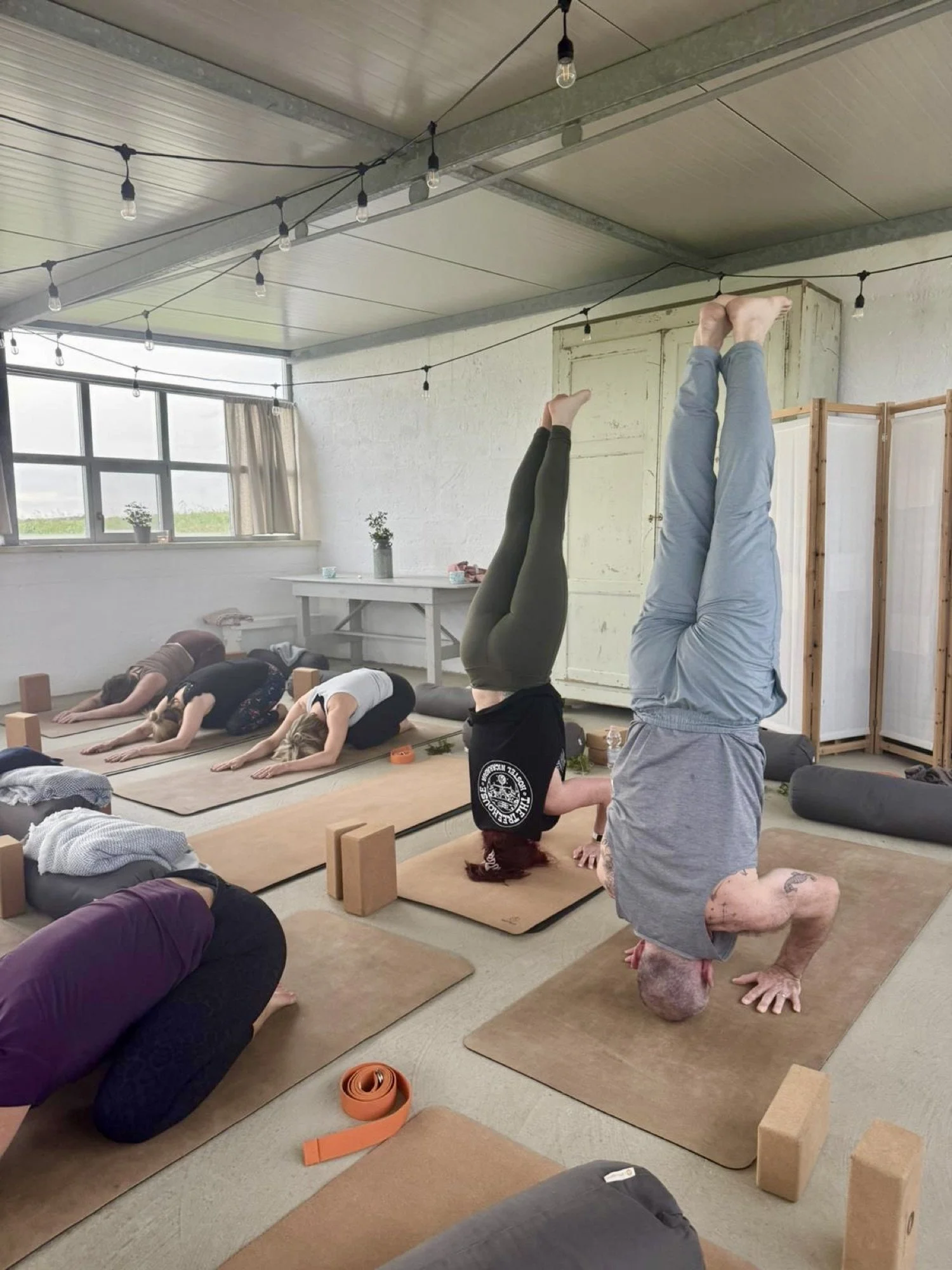
Rest at the end of a long, warm day.
A Little Piece of Puglia
Five nights passed far too quickly. We left rested, nourished and full of memories: morning movement, long lunches, warm afternoons, salty swims, and evenings spent together.
But more than anything, we left with a renewed appreciation for the simple things. A meal made by hand. A table full of people. A beautiful landscape. A slow morning. A deep breath. A moment of being completely present.
What stayed with us was not just the beauty, but the afterglow: clearer heads, softer shoulders, and a determination to keep some of that pace once we were home. We have carried a little of it back into our classes in Warwick. Not the olive groves, but the rhythm, and the permission to slow down.
What Comes Next
Puglia was our first European retreat and it will not be the last. Before the next one, we head to Somerset: Soul and Soil at 42 Acres runs from 30 October to 2 November, three nights of movement, rest and very good food across 173 acres of regenerative land.
And if a full retreat feels like a big first step, our half day retreats closer to home are a gentler way in.
“I thought it was fantastic value for money. I am already booked on to the next retreat in October and I have recommended it to friends.”
VITA: The Art of Being Alive. Not doing more, just being there, and letting somewhere beautiful remind us how good it feels to be alive. Grazie, Puglia. Until next time.
Frequently Asked Questions
-
Most follow a rhythm rather than a timetable. Practice in the morning, a long unhurried lunch, open hours through the afternoon, then something slower before dinner. On ours in Puglia nothing was compulsory, and the space between sessions mattered as much as the sessions themselves. If you are used to fitting a class around work, the real difference is having enough time.
-
No. Our retreats are not built around advanced practice, they are built around having enough time and space to notice what your body and mind are actually doing. If you practise regularly you will find plenty here. If you are relatively new, options are offered throughout and there is no pressure at all to take them.
-
Yes, and plenty of people do. It is one of the two questions we are asked most, and it is rarely an issue beyond the first afternoon. Shared meals do most of the work: on a small group retreat you tend to know everyone by the second evening.
-
Ours covered accommodation, all meals, daily practice and the local experiences we arranged, including the pasta making class. Flights and transfers are normally booked separately. Inclusions vary a great deal between operators, so it is always worth checking exactly what is covered before you book.
-
We would take the shoulder season every time. Late March in Puglia was warm enough to sit outside and cool enough to walk for hours, the countryside was green and just coming into flower, and the sea was properly cold. You get the place closer to how it actually is, without the heat or the crowds of high summer.
-
Look at group size, who is teaching, and how much unstructured time is built into the week. A smaller group changes the feel of a retreat entirely. It is also worth choosing somewhere the location genuinely shapes the days rather than simply providing a backdrop, and checking the pace matches what you actually want.
