Why Am I So Tired After Yoga?
The tiredness that follows a yoga class is rarely the kind you expect. Not the bright, earned tiredness of a run or a swim, but something heavier and softer. You come home, you sit down, and you find you don't especially want to get up again.
If that's been your experience, you're certainly not alone.
At Heist (formerly Heist House Studios) in Warwick, this is one of the questions we're asked most often, usually a little apologetically, as though feeling tired after yoga were something to be embarrassed about. It isn't. It's common, it usually has a straightforward explanation, and for most people it settles within a few weeks.
Here's what's actually happening, why some classes do it more than others, and what helps.
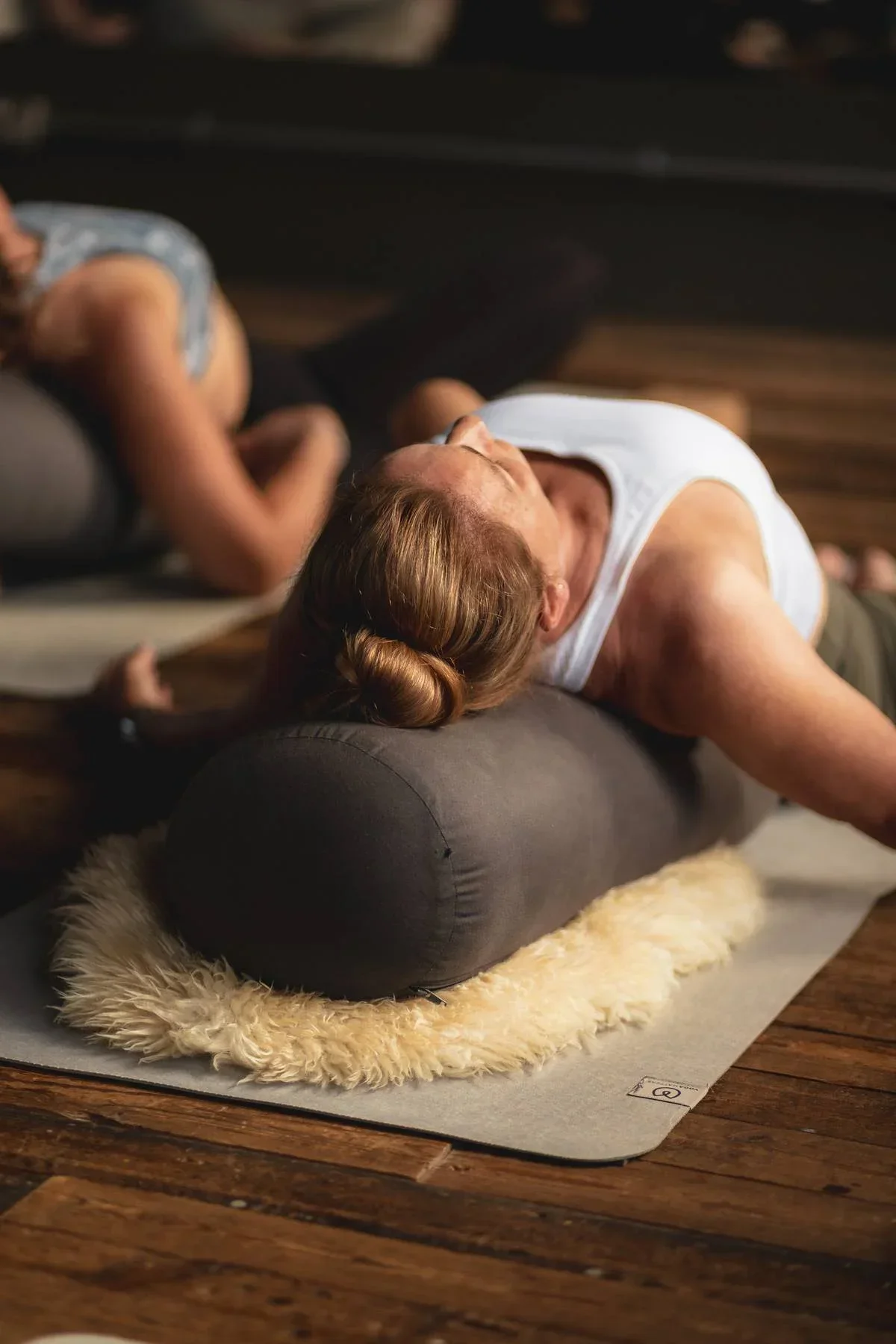
Fully supported shapes ask almost nothing of the body, which is often why they leave you the most tired.
It Isn't a Sign You're Unfit
The worry underneath the question is usually the same. Yoga is supposed to be gentle. So if it's leaving you exhausted, something must be wrong with your fitness.
That isn't how it works.
Even a slow class asks you to hold shapes under load for far longer than most movement does. Running and cycling are repetitive, which means effort is shared across a stride or a pedal stroke, and each muscle gets a brief rest hundreds of times a minute. A held posture offers none of that. The work is continuous, and continuous is unfamiliar.
You're also being asked to stay still and breathe slowly, which quietly removes all the small adjustments your body normally uses to spread effort around. Shifting your weight. Rolling a shoulder. Changing your grip. In a yoga class, you're gently invited not to.
People who run comfortably for an hour are often surprised by how tired they feel after their first few classes. It isn't a reflection of fitness. It's a reflection of doing something the body hasn't done before.
What's Really Happening in the Nervous System
The more interesting answer has less to do with muscles and more to do with the nervous system.
Most of us move through the day in a state of mild alertness. Not distress, just a quiet readiness. Emails, traffic, deadlines, the constant low hum of things to manage. That state is useful. It's also tiring to hold, though we stop noticing it because it rarely stops.
A yoga class interrupts it.
Long exhales, stillness and sustained attention all invite the body towards the parasympathetic side of the nervous system, the part responsible for rest, digestion and repair. When that shift happens, the tiredness you've been carrying all day stops being masked.
It doesn't appear. It becomes noticeable.
This is why it feels so different from ordinary exercise fatigue. People often describe:
a heaviness in the limbs that has nothing to do with soreness
struggling to keep their eyes open on the way home
yawning that begins in savasana and doesn't stop
falling asleep within minutes of getting into bed
sleeping more deeply than they have in weeks
None of that is the body breaking down. It's the body finally being given permission to register how tired it already was.
It's also why the effect is often strongest in the people with the fullest weeks. If you've been running on adrenaline since Monday, the first time you properly stop can come as a shock. This mirrors what we explored in Why Yoga Doesn't Always Feel Relaxing at First, where we look at the restlessness and emotion that can surface alongside the same shift.
Sleepy and Tired Aren't Quite the Same
People tend to use the two words interchangeably, but they usually mean different things, and the difference is worth knowing.
Tired tends to mean heavy and depleted. Lacking the energy for whatever comes next. That's most often the physical side: unfamiliar work, not enough fuel, or a class that asked more than you had that day.
Sleepy is different. It's the specific pull towards actual sleep. Heavy eyelids on the way home. A yawn that arrives in the final few minutes and stays. That one is almost always the nervous system rather than the muscles, and it's the more encouraging of the two.
Sleepiness after a slow class usually means the practice did exactly what it was designed to do. It's also why so many people find they sleep better on the nights they come in.
If what you're feeling is sleepy, there's generally nothing to fix. Simply don't book a slow evening class on a night you need to be sharp afterwards, and do allow yourself an early night when it arrives.
If what you're feeling is drained, and it isn't easing week by week, that's the version worth looking at more closely.
Why Some Classes Leave You More Tired Than Others
Two people can leave the same studio on the same evening, one feeling bright and one feeling poured out. Usually the difference is the style, and learning which one does what to you is the most useful thing you can discover in your first couple of months.
Stronger flowing classes such as Vinyasa and Rocket build heat and ask for continuous attention. They're genuinely demanding, and the tiredness afterwards sits closest to ordinary exercise fatigue. Earned, physical, usually accompanied by an appetite. When you have the reserves, this is the kind of tired that feels good. When you're already depleted, it can flatten you.
Slower classes such as Yin hold shapes for several minutes at a time. People regularly report feeling more tired after Yin than after a flow class, which sounds contradictory until you consider what long holds involve. Staying in one shape for four minutes is a sustained ask of both the body and the mind, and it's where the nervous system shift tends to be most pronounced.
Restorative yoga asks the least physically and often produces the deepest tiredness of all, because that's precisely what it's designed to do. Fully supported shapes, held for long stretches, with nothing to do but be held.
Breathwork and sound healing involve almost no physical effort and can still leave you pleasantly spacious afterwards. Changing the breath and lying still in a quiet room are both powerful inputs to the same system.
The useful conclusion is that tiredness isn't proportional to effort. A gentle class can leave you more tired than a hard one. That's a feature of how the practice works, not a sign you've done something wrong.
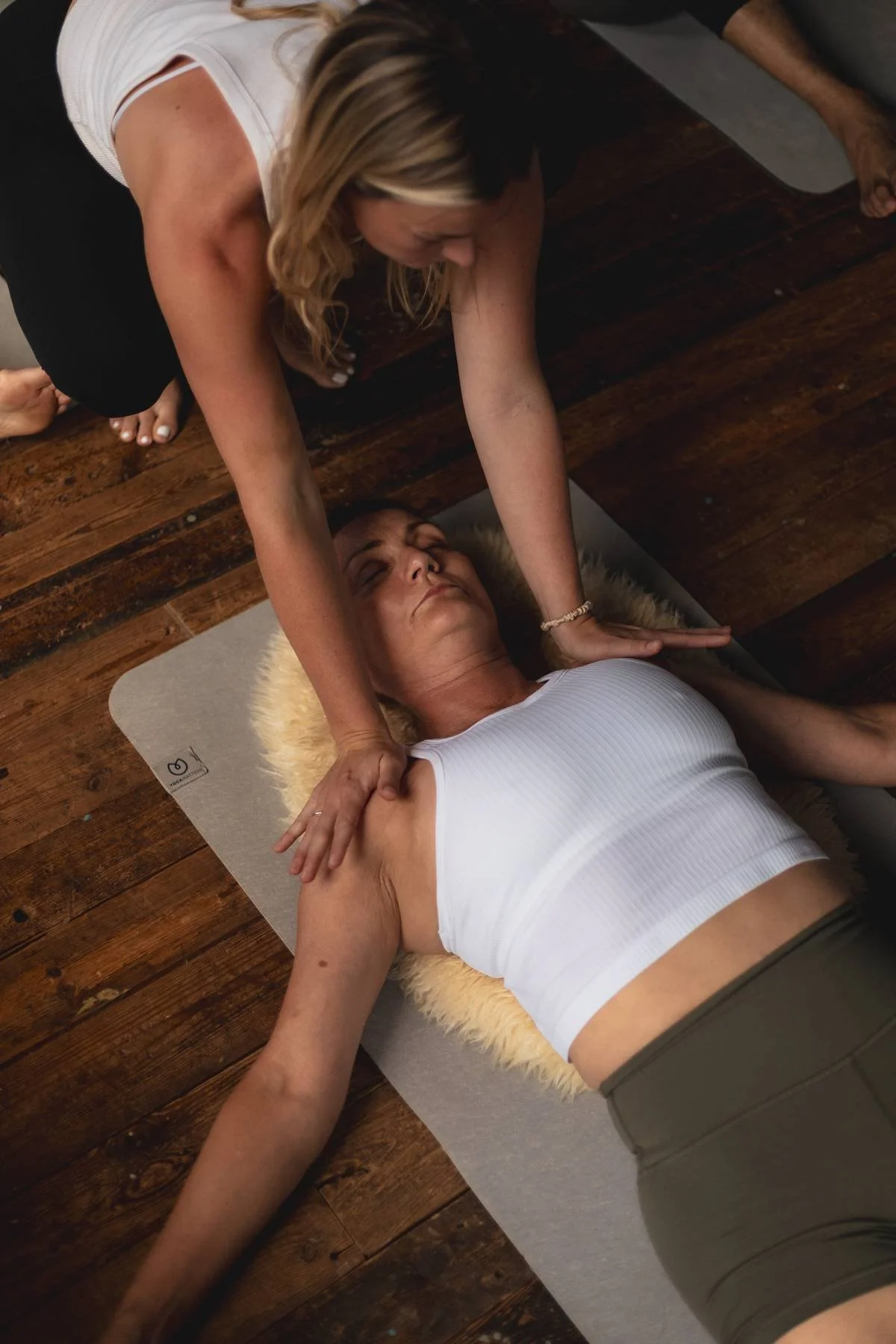
The last few minutes of class, where the nervous system finally has room to let go.
The Simpler Reasons That Are Easy to Overlook
Before reaching for the nervous system explanation, it's worth ruling out the ordinary things. They account for a surprising amount of post-class tiredness, and all of them are easy to change.
You may not have eaten enough. Many people arrive at an evening class straight from work, having last eaten at lunchtime. An hour of movement on an empty tank will leave anyone flat. Something small and easy to digest an hour or two beforehand usually resolves it entirely.
You may be dehydrated. Warm studios, long holds and breath-led practice all increase fluid loss more than people expect, and mild dehydration reads as fatigue long before it reads as thirst.
You may be breathing more deeply than usual. Sustained slow breathing shifts your blood chemistry slightly, and for anyone unused to it that can create a pleasant, slightly floaty tiredness afterwards. It passes, and it passes more quickly the more familiar it becomes.
You may be practising more often than your body is ready for. Enthusiasm is the most common cause of exhaustion in new students. Five classes in your first week isn't a faster route to feeling good.
You may simply be sleeping badly. Yoga is very good at revealing an existing sleep debt rather than creating a new one. If that sounds familiar, our piece on yoga for better sleep looks at what helps.
Tired During Class Is a Different Thing
It's worth separating two experiences that often get described in the same words.
Feeling tired after class is usually the nervous system story above, and it's generally nothing to worry about.
Feeling tired, weak or shaky during class is a different signal. That's more often about fuel, hydration, sleep, an illness not quite shaken off, or simply a class that's stronger than your body wants this week.
If you find yourself needing to sit down partway through, or feeling light-headed when you stand, please don't quietly push through. Tell your teacher. Every class we run has options that bring the intensity down without you having to leave the room, and every teacher would far rather know.
When Tiredness Arrives With Emotion
Sometimes the tiredness doesn't come alone.
People occasionally find that a slow class leaves them not only heavy but unexpectedly tearful, tender, or oddly flat for an evening. It can be unsettling, particularly when nothing in the class seemed emotional at the time.
This is more common than most people realise. When the nervous system softens, it doesn't soften selectively. Physical tension and held emotion often ease at a similar pace, and what surfaces afterwards can feel disproportionate to an hour spent lying on a mat.
It's rarely a sign that something has gone wrong. More often it's a sign that the body felt safe enough to let something go.
If that happens, the kindest response is usually a quiet evening rather than analysis. It tends to pass by morning. If it keeps happening, or it feels heavier than you'd like, it's worth mentioning to your teacher, and worth reading Why Yoga Doesn't Always Feel Relaxing at First, which explores this in more depth.
What Actually Helps
If the tiredness is taking over your evening rather than rounding it off gently, a few small adjustments usually make the difference.
Eat something light an hour or two before class
Hydrate across the day rather than in the ten minutes beforehand
Leave yourself twenty minutes afterwards before the next demand
Match the class to the week you're actually having, not the week you planned
Give it six weeks before drawing any conclusions
That last one matters more than the rest. Almost every student who tells us yoga is wiping them out says something quite different by their second month.
It's also worth paying attention to what you do with the rest of the evening. Going straight from the mat to a laptop, or from a slow class into a late night, tends to turn a pleasant heaviness into something that feels more like depletion. The practice has invited your body to downshift. Giving it a little room to stay there is usually the difference between waking up refreshed and waking up groggy.
What the First Six Weeks Usually Look Like
For most people, the heaviness belongs to the early weeks rather than the practice itself. The pattern is consistent enough to be worth knowing in advance.
In the first week or two, the tiredness is usually at its most pronounced. Unfamiliar physical work and the nervous system shift are happening at the same time, and it often comes with unusually deep sleep.
By weeks three and four, the physical side begins to soften. The body adapts to holding shapes under load, and classes that felt hard start to feel manageable. The nervous system effect often remains, but it begins to feel less like being flattened and more like being properly switched off.
By weeks five and six, most people find the thing they came for. Calm rather than depleted. Clear rather than foggy. The tiredness that remains is usually the pleasant kind, and the improvement in sleep tends to stay.
Noticeable change within four to six weeks of practising once or twice a week is a reasonable expectation. Practising more often may shorten that, though more isn't automatically better in the beginning.
When It's Worth Paying Closer Attention
Most tiredness after yoga is unremarkable. There are a few patterns worth treating differently.
tiredness that lasts more than a day or two after every class, rather than easing by the next morning
dizziness, feeling faint or nausea during class
tiredness that's deepening week by week rather than lifting
fatigue that isn't limited to the days you practise
If you're recovering from illness, managing a long-term condition, or are pregnant, please tell your teacher before class so they can offer you options rather than guess.
While yoga can support energy and rest, it isn't a substitute for medical advice. Persistent, unexplained fatigue is a reason to speak to your GP rather than to adjust your practice, and the NHS guidance on tiredness and fatigue is a sensible place to begin.
Should You Still Come When You're Already Exhausted?
This is the question that stops people at the door, and it's worth answering honestly.
When you're genuinely depleted, a strong class is unlikely to give you what you need. Pushing a tired nervous system harder rarely makes it recover faster. It usually just extends the recovery.
But staying home isn't automatically the kinder option either. For many people, the days they least feel like coming are the days a slow practice helps most, because exhaustion and over-alertness often travel together. The body is tired. The mind won't settle. Lying on the sofa doesn't resolve either.
What tends to work is lowering the demand rather than removing it.
choose Restorative, sound healing or breathwork over a flow class
take the gentlest version of every option offered
let the teacher know you're running low before you begin
give yourself permission to rest for part of the class
leave early if you need to, quietly and without apology
There's no requirement to earn your place in a yoga class by working hard in it. Lying still in a supported shape for an hour, in a warm room, with nothing being asked of you, is a complete practice. Some of the most valuable sessions people have with us are the ones where they did almost nothing at all.
Choosing a Class That Suits Where You Are
If you're consistently leaving class wiped out and would rather not be, the answer is usually the style rather than the frequency.
If you're running close to empty, start slow. Restorative is the most direct option. Breathwork and sound healing are the gentlest entry points when you have very little to give. Yin sits usefully between those and a flow class.
If you have reserves and want to use them, the stronger classes will serve you well, and the tiredness afterwards will feel earned rather than imposed.
Alternating often works better than committing to one. Something strong midweek, something slow at the weekend. It's more sustainable, and it gives you a much clearer sense of what each style actually does for you.
A Gentler Way to Read It
Feeling tired after yoga isn't a sign the practice isn't working. More often it's the first clear sign that it is, because you've finally slowed down enough to notice the state you were already in.
That's uncomfortable for a few weeks. Then it becomes useful, because once you can feel something, you can do something about it.
If you're not sure where to begin, our weekly timetable lists every style we run in Warwick, and our beginners classes are built for exactly this question. Come and tell your teacher how you're feeling before class. That's what they're there for.
Frequently Asked Questions
-
Usually for two reasons at once. Holding shapes under load is unfamiliar work, even in a slow class, and the long exhales and stillness invite your nervous system towards rest. That second part doesn’t create tiredness so much as let you finally notice the tiredness you were already carrying.
-
Very. Sleepiness is a different thing from feeling drained, and it’s the more encouraging of the two. It usually means the practice did exactly what it was designed to do, which is why so many people find they sleep more deeply on the nights they come in.
-
For most people it eases within four to six weeks of practising once or twice a week. The first fortnight tends to be the most pronounced, the physical side softens by weeks three and four, and by weeks five and six what’s left is usually the pleasant kind.
-
Because tiredness isn’t proportional to effort. Long holds in Yin and fully supported shapes in Restorative are where the nervous system shift is most pronounced, so a slow class can easily leave you heavier than a flow class did.
-
Often yes, but choose the style carefully. A strong class rarely gives a depleted body what it needs, while Restorative, breathwork or sound healing lower the demand without removing it. Tell your teacher you’re running low before you begin, and rest for part of the class whenever you want to.
-
If it lasts more than a day or two after every class, deepens week by week, isn’t limited to the days you practise, or arrives with dizziness or feeling faint. Persistent unexplained fatigue is worth raising with your GP rather than solving by adjusting your practice.